Artist Statement
My work is an extension of a personal journey traversing the boundaries between traditional representations and contemporary cultural commentary. As an indigenous and Black male in America, my personal experiences provide the foundational inspiration for my creations. I seek to communicate the variety of these experiences in a digestible, impactful presentation that invites viewers to reflect and engage.
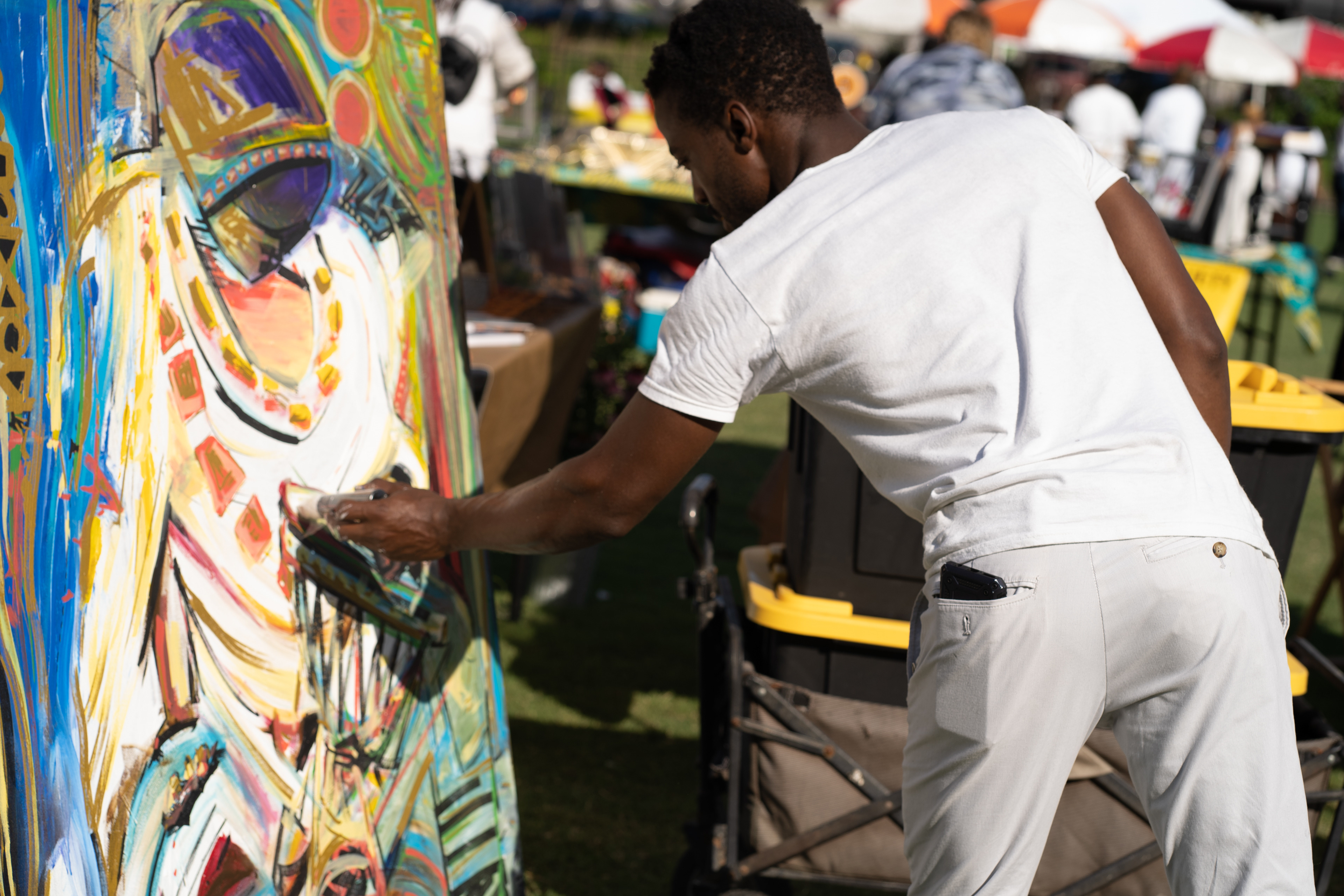
Throughout my career, I have developed unique processes across painting, printing, and sculpting. My practice often bridges the gap between the two-dimensional and the three-dimensional using new tools and media only available to current and future generations while being cohesive through its designed language. I have long used bold colors, sharp angles, and metallic paints to create paintings that mimic the appearance of stained glass. Over the years those techniques have become the focus of my current work developing new Black and American designs.
Striving to create beautiful art, these works are developed with deep consideration of my ancestry and the often-neglected themes of American history explaining my lineage. Installations and sculptures I create stand as concrete presentations of this cultural identity. Different from my paintings, these work’s multidimensionality allows a different layering of stories and tactile connection to memory not experienced in crafted paintings.
Overall, my work explores the spirituality and complex legacy of Americans, its citizens, and those relationships with self and others. By creating "cultural artifacts," I aim to represent the displaced natives of the Americas who remain disconnected from their full history. Working in Richmond, Virginia, is a deeply intentional decision. As the former central hub for the domestic slave trade, the city holds stories of my family and fellow seekers of liberty within its soil and architecture. I view my art as a means to nurture discussions regarding American, Black, and/or Indigenous stories. It is my belief bridging communities and progressing national healing can only happen by exploring perspectives, collaboration, and connecting communities. Ultimately, I measure the success of my work through the viewer’s interpretations and their reflective experiences.
Artist Bio
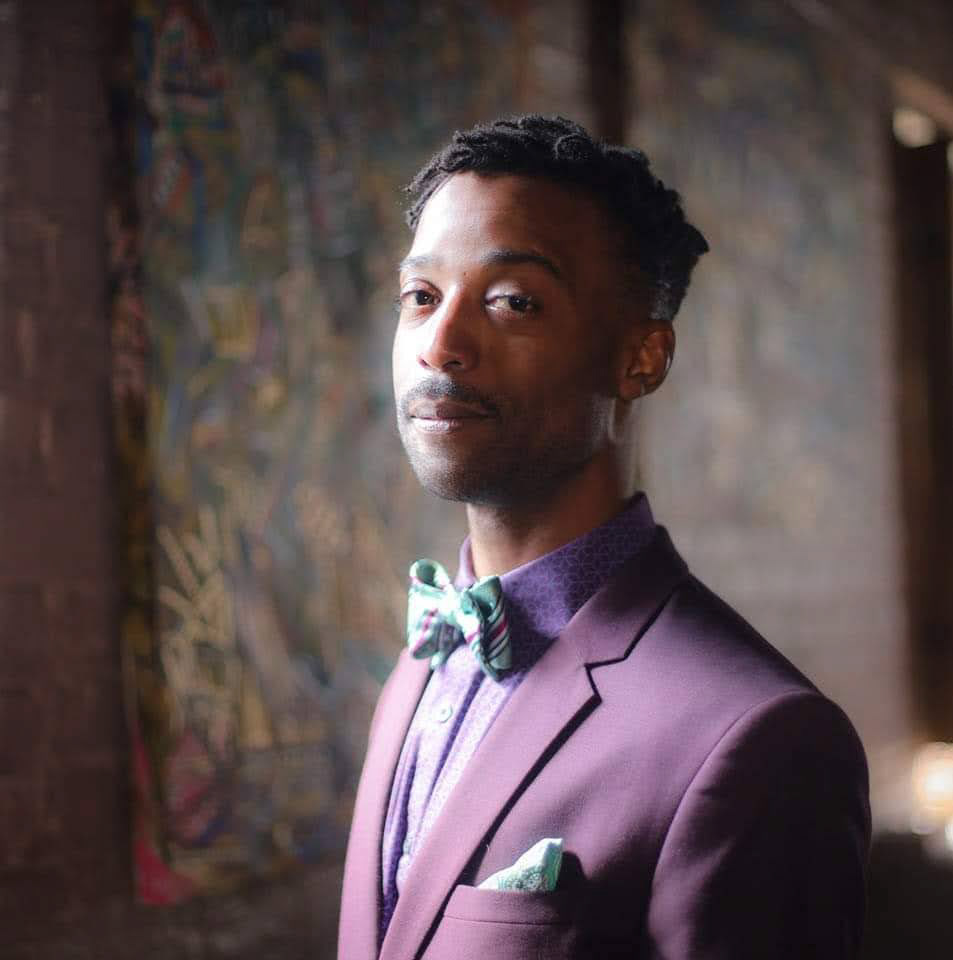
Kyle M. Epps is a multi-disciplinary artist, educator, and designer based in Richmond, Virginia. Their creative practice encompasses painting, programming, sculpture, and textile arts, with a specific focus on developing "Freestyle" designs. Epps holds a BFA in Communication Arts from Virginia Commonwealth University (2008) and has extensively studied history, culture, and sustainable agriculture. Their formal engagement with the arts began early in education while attending the Center for the Arts at Henrico High School.
An indigenous Black American, Epps draws inspiration from personal identity and the associated narratives of American history. This work often explores displaced histories of Indigenous and Black Americans, seeking to nurture discussion and progress national healing. Early career art was defined by a unique painting technique mimicking stained-glass through the use of bold colors and metallic paints, a style the artist continues to evolve.
Epps’ professional career is marked by significant accolades, including winning first place twice from the National Endowment of the Arts (2010 and 2012). In 2024, they served as the Artist-in-Residence at the Lewis Ginter Botanical Garden and was named Best Sound Designer by the Richmond Theatre Community Circle. Their work has been exhibited at various prestigious institutions, including the Black History Museum & Cultural Center of Virginia, 1708 Gallery, and the Virginia State University Meredith Gallery.
Beyond their studio practice, Epps is a dedicated community leader, having served on the boards of the Black American Artist Alliance, Community Food Collaborative, and the Writer's Den. Through their ongoing residency work and exhibitions, Kyle remains committed to exploring American narratives and creating "cultural artifacts" that expand the understanding of human culture.